We had 12 official meetings of the club this year, an unofficial meeting in the Coach House before the January meeting, and a guest lecture in October by horror author Ramsey Campbell (not forgetting his previous attendance in January).
The topics for the year have already been listed on the old 2011 calendar page, but they were:-
Jan Ramsey Campbell Guest Lecture - The Works of H P Lovecraft
Feb First Contact
Mar Post-Apocalypse
Apr Psi Powers
May The Works Of Ray Bradbury
Jun Children In SF & Fantasy
Jul Adaptations
Aug The Works of J G Ballard
Sep Dystopias
Oct The Works of John Wyndham
Nov Colonisation
Dec The Unmissables
Early Start
Since the January meeting took place so late in the month this year, we decided to hold an unofficial meeting a fortnight before, in the Coach House. So in January, we actually had two meetings.
The first half of the year had enjoyable meetings, covering the various topics described above - the "first contact" and "post-Apocalypse" genres, the themes of psi-powers (telepathy, telekinesis, ESP, mind control and psionics in general) and the works of Ray Bradbury.
June.
We had some ... drama in June. Sadly, not a lot could be done to prevent what followed, namely the splitting of the club into two factions - the main club, still going strong to this day thus far, and TEBS, the unofficial "rebel" group.
The split became permanent not long after the meeting, sadly - some might maintain that it was for the best, and others believe that a good spirit had been maligned to the point where he had no option but to leave. I'll leave the ultimate verdict on this matter to posterity, but I'd personally welcome Graham Weaver at any meeting of the library club in future as I carry no personal animus towards Mister TEBS.
Due to a combination of the June drama, and of unforeseen circumstances arising separately in the life of our former President Bernard Smith, he then decided to stand down and hand over the reins to myself - the current President and blog maintainer. July saw the creation of this blog to run separately from the TEBS site, and the meeting of the month with the theme of "Adaptations."
Afterwards, the club began to settle back into its regular routine, with my stated goal of minimising the admin bit bearing some positive fruit from August onwards. Since the topics for the year had been settled since 2010, the club had little choice but to finish the year with the topics listed above.
The topic of "Dystopias" in September prompted disagreement as to whether or not some settings comprised a dystopia, specifically the Mega-City One setting of Judge Dredd. A quick examination of the genre revealed that a lot more dystopias existed than people imagined, leading to the personal conclusion that - apart from being a really popular choice for a setting - a dystopia is really a utopia ... for somebody else, and definitely not the reader.
Focus on Authors
Some of the 2011 meetings focused on specific authors and their works: H P Lovecraft in January, a meeting ably helmed by guest speaker, the magnificent horror author Ramsey Campbell; Ray Bradbury, author of Fahrenheit 451, The Martian Chronicles and Something Wicked This Way Comes among others, came under scrutiny in May; the spotlight fell on J G Ballard in August, and we covered the works of John Wyndham in October.
Rounding Off The Year
The last two meetings, covering "Colonisation" and "The Unmissables," came upon us with disturbing speed, rounding off 2011 before we knew it. After a satisfying December meeting wherein we each had out chance to talk about the SF or Fantasy book that we really could not do without, we wrapped up club business for 2011 with a festive pint sunk at the Bull & Stirrup afterwards. I had tea ... eventually.
Final Roundup
This club has had its dramas, and it has suffered losses and changes, emerging a little slimmer and with a sense of more than a little loss; but it has survived a drama which could have torn it apart, and as of the end of 2011 it was as strong as it has ever been, with new visitors appearing seemingly every month. Some stay; others only stay a short time, like Ellie Lee and Hannah Taylor. Some members, we thought would be here forever, like Bernard Smith and Graham Weaver and his friend.
And some people found themselves, in 2011, doing things they never thought they'd be doing, but it was all for the club.
Conclusion: Looking Ahead
As 2012 looms, a new series of meetings has gone down in the calendar, beginning January 28th with "The Works of Olaf Stapledon." This time last year, we'd planned on hosting an unofficial meeting in the Coach House the fortnight before the official club meeting - now, planning for a repetition of this event in January 2012 is unnecessary because we have TEBS meetings to go to instead.
Whatever happens, the club is bigger than any one of its members. As long as at least one person wants to turn up and talk about SF or fantasy books, there should be a club for them to go to.
I hope, therefore, that I'll be here on December 2 next year, having not only celebrated one full year as President of the club (July '11 to June '12) but a full year of the club in 2012, my second full year as a member, and that I'll still be President at that time, blogging a summary of the club's 2012 meetings and looking forward to 2013.
Or to the start of the Sixth Age and the arrival of Shadowrun, whichever comes first.
Season's Greetings to one and all. Hope everyone who partook enjoyed the mince pies, supplied compliments of the Management.
Showing posts with label 2011. Show all posts
Showing posts with label 2011. Show all posts
2011-12-04


December Meeting
And so we came to the final meeting of 2011, and the theme of "The Unmissables."
With this, we came to the end of the themes picked out during the old regime. Next month, we move to the topics picked out after the changeover of leadership earlier this year a changeover that did not come without surrounding unfortunate circumstances.
"The Unmissables." During November, I defined the term somewhat more firmly by putting it in the context of the popular BBC radio show "Desert Island Discs," and its premise that if you got marooned on a desert island with (IIRC) one book and eight pieces of music on disc, what book - and what music - would you pick? Which unmissable book would you take with you if you had to go through a literal Hell?
I'd made my pick a long time before the meeting itself, since of all the books in my collection I can only think of one that has never strayed far from my side, and never bored me even though I'd read it a thousand times before.
And to some, I seem to have made some sort of wrong choice (?) - but I'll expand on that in a separate post, or quite possibly on my blog The Serpent's Tongue.
And so we came to the choices.

John Rennie chose First Lensman, in this case representing an entire series, the Lensman Series as written by E E "Doc" Smith. In his own words, "... if you like hard scifi/space opera you must read the Lensman series by E E Doc Smith as that's where it all started." In this case, John chose First Lensman as an example of a foundational series; along with Isaac Asimov's Foundation Trilogy (and only the trilogy, no disrespect intended), the Lensman series form the base of any well-informed science fiction fan's reading experiences.
The works of Isaac Asimov would crop up again, later in the meeting.
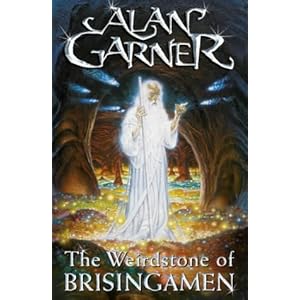
Fiona chose a similar foundational book - The Weirdstone of Brisingamen by Alan Garner. This book, along with others penned by Garner, encapsulates mythologies both local, Celtic and Norse, bringing them into a seamless whole and setting it amid the real world geographical landscape of Alderley Edge, not more than a dozen miles from his home there - for the most part.
That apparently seamless blending of the real and the unreal, the mundane and the mythical, and that sense of pilgrimage when a Garner fan visits the Edge, marks Weirdstone as unmissable.

An alternative book, 2001: A Space Odyssey, had personal significance for Fiona, as well; her personal experience made this book unmissable (though I could personally add Rendezvous with Rama, Profiles of The Future (non-fiction), Childhood's End and The Fountains of Paradise to this list of unmissable Arthur C Clarke books for various reasons).

Tibor Fischer's The Collector Collector, Geoff's choice, concerns the events surrounding a unique artifact, described by the book's publisher as "unquestionably the finest novel ever narrated by a bowl."
Geoff's alternates included Bradbury's The Martian Chronicles and Fahrenheit 451, and a story called "Pit Stop" about a group of people stuck in a remote diner waiting for a certain visitor ...

Penny had a hard time choosing her favourite - with such a range of choices available, who could blame her? - before settling for (author of Game of Thrones) George R R Martin's Fevre Dream, his vampire novel set on the Antebellum Mississippi. Alternative choices included Douglas Adams' The Hitchhiker's Guide to The Galaxy series, PKD's Do Androids Dream of Electric Sheep? and Clifford D Simak's City.
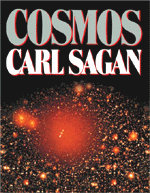
For John Oakes, between the choices of I, Robot by Isaac Asimov, On A Pale Horse by Piers Anthony, and the non-fiction The Science of Science Fiction and Carl Sagan's seminal Cosmos, eventually chose I, Robot - with some lively debate as to whether the Will Smith movie counted as a decent portrayal of the book (with an overwhelming, near-unanimous verdict of "NO!")
Asimov's books would appear again, later in the meeting.

Rodney chose the whimsical, yet compelling Shades of Grey by Jasper Fforde, laying out the bizarre world of Eddie Russett. The link above connects directly to Jasper FForde's website, written in "vintage HTML" rather than letting "professionals" handle the coding, thereby losing something in translation and letting a certain "corporate distancing" creep into his hand-crafted web pages.
Completely understandable, and I can see Rodney's passion for the author and his works.
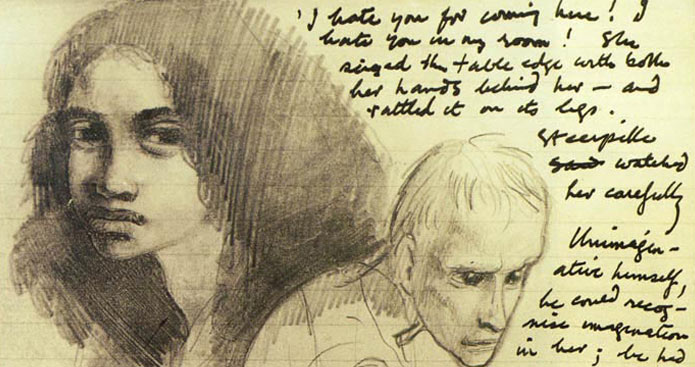
Next came Nick's choice of Mervyn Peake's Gormenghast, the collection of three books Titus Groan, Gormenghast and Titus Alone (why did I almost type in "Forever Alone" there instead?)
If you would consider Alan Garner's fantasies as the foundation of any well-informed fantasy reader's library, perhaps reinforced by Ursula K LeGuin's Earthsea books, then Gormenghast builds upon that foundation to provide a solid base for any beginning fantasy reader. However hard it might seem to get through, every reader must have at least one challenging book to get through - whether the Illuminatus! Trilogy of Robert Anton Wilson, Heinlein's Time Enough for Love or, indeed, Nick's choice of Mervyn Peake's masterwork.

Kyle, too, had a hard time choosing a truly unmissable book. After Consider Phlebas by Ian Banks, Richard Morgan's Altered Carbon and George R R Martin's Game of Thrones he settled on Joe Abercrombie's The Blade Itself (above); by its description, a trilogy which outshines George R R Martin's above work, posing a possible challenge to readers to pick up the works of both authors for careful perusal and comparison ... perhaps a topic for some future meeting of the club, or even TEBS.
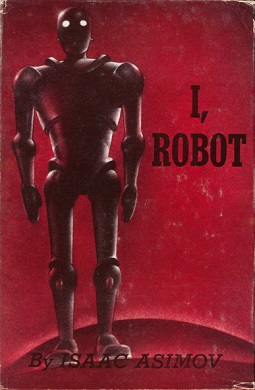
Marco, a newcomer to the club, unfortunately did not have as much time to prepare as the others, though he chose I, Robot as his book in the end, describing it as a book about relationships between man and machine, and a first departure from the then-traditional "robot goes berserk" stories making their rounds in SF at that time.
Which left only one other speaker; only one other choice.
And for that choice ... I'll leave mine for the next blog.
With this, we came to the end of the themes picked out during the old regime. Next month, we move to the topics picked out after the changeover of leadership earlier this year a changeover that did not come without surrounding unfortunate circumstances.
"The Unmissables." During November, I defined the term somewhat more firmly by putting it in the context of the popular BBC radio show "Desert Island Discs," and its premise that if you got marooned on a desert island with (IIRC) one book and eight pieces of music on disc, what book - and what music - would you pick? Which unmissable book would you take with you if you had to go through a literal Hell?
I'd made my pick a long time before the meeting itself, since of all the books in my collection I can only think of one that has never strayed far from my side, and never bored me even though I'd read it a thousand times before.
And to some, I seem to have made some sort of wrong choice (?) - but I'll expand on that in a separate post, or quite possibly on my blog The Serpent's Tongue.
And so we came to the choices.
John Rennie chose First Lensman, in this case representing an entire series, the Lensman Series as written by E E "Doc" Smith. In his own words, "... if you like hard scifi/space opera you must read the Lensman series by E E Doc Smith as that's where it all started." In this case, John chose First Lensman as an example of a foundational series; along with Isaac Asimov's Foundation Trilogy (and only the trilogy, no disrespect intended), the Lensman series form the base of any well-informed science fiction fan's reading experiences.
The works of Isaac Asimov would crop up again, later in the meeting.
Fiona chose a similar foundational book - The Weirdstone of Brisingamen by Alan Garner. This book, along with others penned by Garner, encapsulates mythologies both local, Celtic and Norse, bringing them into a seamless whole and setting it amid the real world geographical landscape of Alderley Edge, not more than a dozen miles from his home there - for the most part.
That apparently seamless blending of the real and the unreal, the mundane and the mythical, and that sense of pilgrimage when a Garner fan visits the Edge, marks Weirdstone as unmissable.
An alternative book, 2001: A Space Odyssey, had personal significance for Fiona, as well; her personal experience made this book unmissable (though I could personally add Rendezvous with Rama, Profiles of The Future (non-fiction), Childhood's End and The Fountains of Paradise to this list of unmissable Arthur C Clarke books for various reasons).
Tibor Fischer's The Collector Collector, Geoff's choice, concerns the events surrounding a unique artifact, described by the book's publisher as "unquestionably the finest novel ever narrated by a bowl."
Geoff's alternates included Bradbury's The Martian Chronicles and Fahrenheit 451, and a story called "Pit Stop" about a group of people stuck in a remote diner waiting for a certain visitor ...
Penny had a hard time choosing her favourite - with such a range of choices available, who could blame her? - before settling for (author of Game of Thrones) George R R Martin's Fevre Dream, his vampire novel set on the Antebellum Mississippi. Alternative choices included Douglas Adams' The Hitchhiker's Guide to The Galaxy series, PKD's Do Androids Dream of Electric Sheep? and Clifford D Simak's City.
For John Oakes, between the choices of I, Robot by Isaac Asimov, On A Pale Horse by Piers Anthony, and the non-fiction The Science of Science Fiction and Carl Sagan's seminal Cosmos, eventually chose I, Robot - with some lively debate as to whether the Will Smith movie counted as a decent portrayal of the book (with an overwhelming, near-unanimous verdict of "NO!")
Asimov's books would appear again, later in the meeting.
Rodney chose the whimsical, yet compelling Shades of Grey by Jasper Fforde, laying out the bizarre world of Eddie Russett. The link above connects directly to Jasper FForde's website, written in "vintage HTML" rather than letting "professionals" handle the coding, thereby losing something in translation and letting a certain "corporate distancing" creep into his hand-crafted web pages.
Completely understandable, and I can see Rodney's passion for the author and his works.
Next came Nick's choice of Mervyn Peake's Gormenghast, the collection of three books Titus Groan, Gormenghast and Titus Alone (why did I almost type in "Forever Alone" there instead?)
If you would consider Alan Garner's fantasies as the foundation of any well-informed fantasy reader's library, perhaps reinforced by Ursula K LeGuin's Earthsea books, then Gormenghast builds upon that foundation to provide a solid base for any beginning fantasy reader. However hard it might seem to get through, every reader must have at least one challenging book to get through - whether the Illuminatus! Trilogy of Robert Anton Wilson, Heinlein's Time Enough for Love or, indeed, Nick's choice of Mervyn Peake's masterwork.
Kyle, too, had a hard time choosing a truly unmissable book. After Consider Phlebas by Ian Banks, Richard Morgan's Altered Carbon and George R R Martin's Game of Thrones he settled on Joe Abercrombie's The Blade Itself (above); by its description, a trilogy which outshines George R R Martin's above work, posing a possible challenge to readers to pick up the works of both authors for careful perusal and comparison ... perhaps a topic for some future meeting of the club, or even TEBS.
Marco, a newcomer to the club, unfortunately did not have as much time to prepare as the others, though he chose I, Robot as his book in the end, describing it as a book about relationships between man and machine, and a first departure from the then-traditional "robot goes berserk" stories making their rounds in SF at that time.
Which left only one other speaker; only one other choice.
And for that choice ... I'll leave mine for the next blog.
2011-08-27
The 2011 Season Has Ended
The last of the 2011 club meetings has come and gone. Many thanks to all concerned.
For future reference and to avoid future repetition, I am summarising here all of the topics covered in 2011.
For future reference and to avoid future repetition, I am summarising here all of the topics covered in 2011.
| January | {unofficial club meeting on 15th) Ramsey Campbell Lecture on H P Lovecraft |
| February | First Contact |
| March | Post-Apocalypse |
| April | Psi Powers |
| May | The Works of Ray Bradbury |
| June | Children In SF & Fantasy |
| July | Adaptations |
| August | The Works of J G Ballard |
| September | Dystopias |
| October | The Works of John Wyndham |
| November | Colonisation |
| December | Unmissables |
Subscribe to:
Posts (Atom)